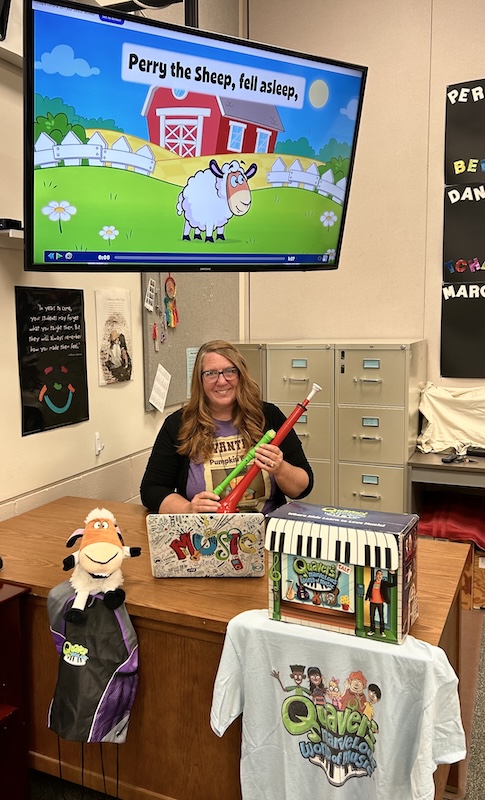
When you step inside of a music classroom today, what you’ll see is far more promising than ever before.

The Every Student Succeeds Act has erased any perception that music might be an academic afterthought.
It specifically identifies music education as a vital component to a child’s well-rounded education. However, when it comes to recognizing the wide-ranging benefits of music education, a void remains.
Gaining recognition
Beyond the intrinsic value of music as an art, music classrooms are teaching other valuable skills. As readiness skills are increasingly recognized as essential, school districts across the country are searching for ways to integrate these practices into their general curriculum.
Within the modern-music classroom, the echoes of readiness skills are heard the loudest. Here, students learn to develop important social skills. They gain a deeper understanding and appreciation of themselves and their unique place in the world.
Celebrating education
Singing a solo builds self-confidence. Playing in an ensemble develops relationship skills and belonging. The study of different music and styles fosters appreciation and respect. The list goes on and on.
This intersection is exciting and should be celebrated. Music is the medium through which whole-child education can be explored and expressed. It’s time for music education to take a full seat at the table — if not at the head, then certainly at the center. For too long, it’s been left waiting in the wings.