An Educator Reflects on QuaverMusic
Arranged by Kristin Clark Taylor
In this Q&A, elementary music teacher Melody Jenkins applauds Quaver for its “customizability,” explains what the resource means to her students, and debunks some common misconceptions once and for all.
Q: When did you first learn about QuaverMusic?
A: I’m in my sixth year of teaching elementary music. I’ve been familiar with Quaver since I was in college, when I got to attend some sessions and conferences.
During the elementary portion of my student teaching semester, in the Spring of 2020, I was able to dig deeper into Quaver, and I really loved it. Then once I started teaching, I was able to get it at the school where I taught and I’ve been using it ever since!”
Q: What do you like best about Quaver?
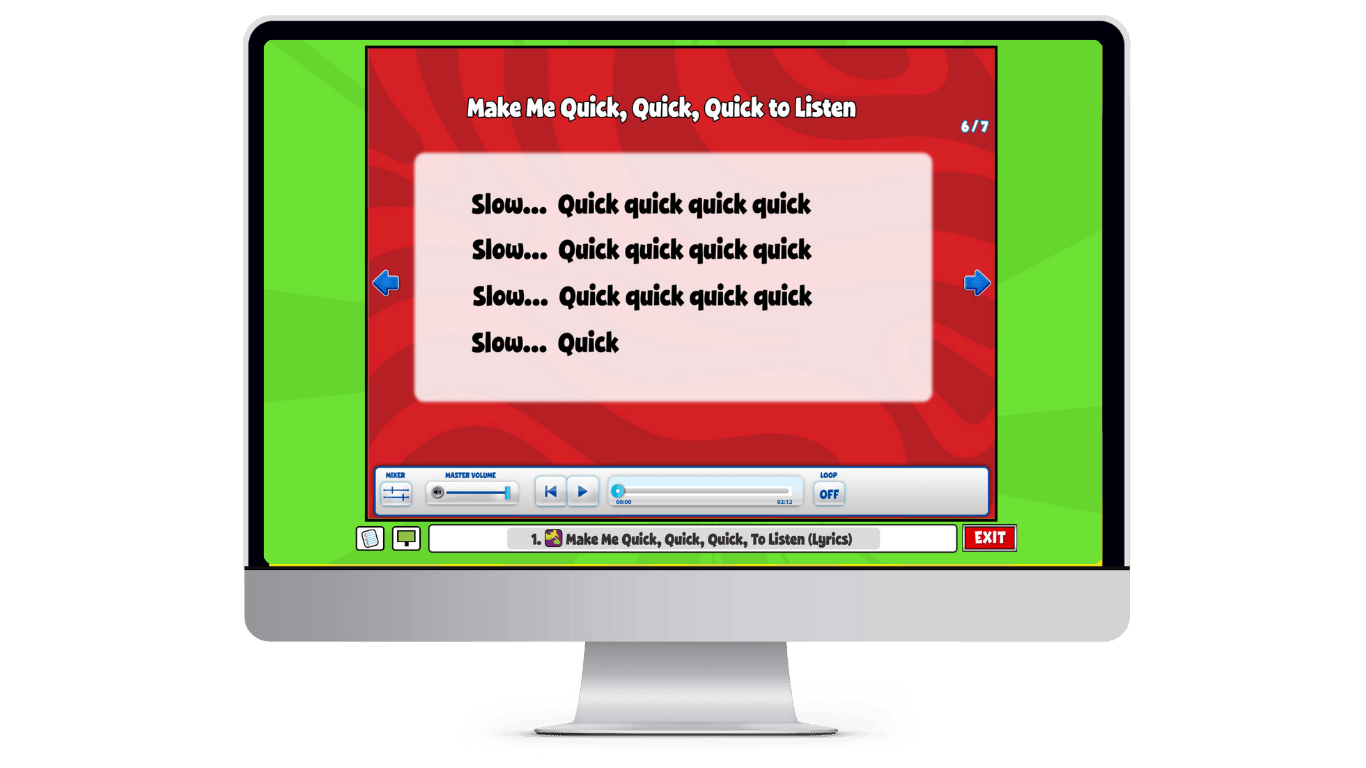
A: One of the best things about Quaver is how customizable it is for your own needs. I can look up different songs and even change the key to better fit my students’ voices. I can change the tempo.
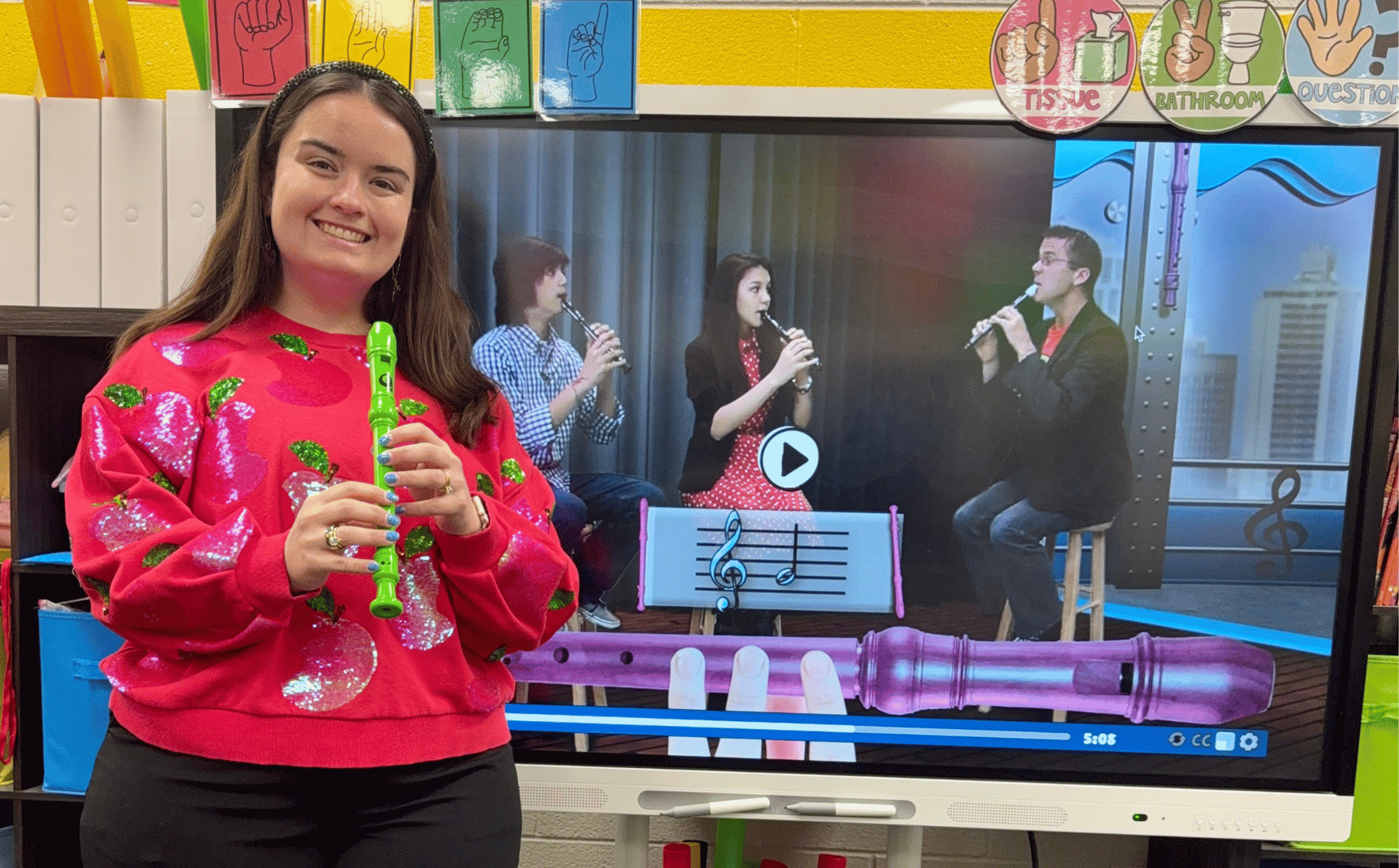
We’ve really been digging into the instrumental lessons lately – especially the ukulele and recorder. These lessons really delve into the background of the instruments and they present the instrument in an accessible way, especially the recorder. This is helpful for my students and for me, especially when I’m teaching these instruments to first-time learners. They also really enjoy the characters – especially Quaver!
Q: What would you say to parents and administrators who might worry that Quaver’s fully digital format is too much screen time?
A: There’s so much more to Quaver than just screen time. I think of Quaver as more of a menu that you can choose from – you don’t have to use everything. It’s very customizable. With my older students, the 5th-graders, they enjoy the ukuleles. Fourth-graders have been working on the recorder. They love the instruments. Even some of the songs that are a little goofier, like “Baba Oo LaLa” they enjoy singing along. They enjoy being engaged!
Q: Some teachers seem to worry that a platform like this makes them less necessary. What would you say to that, based on how you actually use it day to day?
A: I like to think of teaching music almost like a car. The teacher is the key to the ignition; the teacher will bring it [the process of teaching] to life.
If you just hit “play” on a recorder lesson but don’t have a teacher setting it up and explaining how to hold the instrument and other hands-on lessons, it just won’t work. You need that skilled music teacher to execute the lesson to its fullest.
Q: If someone peeked through your classroom window while you were teaching a Quaver lesson, what would they see? Paint the picture.
A: You’d see lots of active music-making! We’re up and moving! We’re singing songs. My second-graders have been working on the instruments of the orchestra. They also enjoy the instrumental family videos – it’s silly, it’s fun, and they’re getting to actually see the instruments. In lots of the episodes, they get to see kids their age level actually playing the instruments. It’s important for them to see themselves in these images.
My students also love getting to customize their own avatars and play games on Quaver Street. I can send them to Quaver Street and [when] they log in, I know that everything they encounter will be school-appropriate. They won’t run into anything that they should not see.
Q: Every school’s music program looks a little different. How much do you adapt or customize Quaver to fit your needs?
A: Here’s an example: We have a decent amount of winter weather in our state. I can assign quizzes, lessons, and episodes about different music genres during snow days! Sometimes we might get to these kinds of lessons during our regular school day, but it’s really nice to be able to pop in lessons like this for Virtual Learning Days!
Q: How long did it take before you felt like you really knew what Quaver could do?
A: I’ve been very fortunate to have had Quaver for my entire teaching career. It’s been cool to see it grow, and I love how they’re always adding new resources. They’re always growing. I also like the different methodologies, with Kodály and Orff. The people at Quaver are always responsive to feedback from educators and are consistently trying to serve their teachers in the best possible way.
Want to bring QuaverMusic to your school? Go to QuaverEd.com/Music to find out how!
Kristin Clark Taylor is an author and an editor.
***