Music Curriculum Makes the Grade with Administrators and Educators Alike
By Kristin Clark Taylor
From a “No” to a “Yes”
Dr. Anne-Marie Patrick has a history with Quaver.
Before she assumed her current role as Fine Arts Coordinator in Alabama’s Florence City Schools District, Dr. Patrick was a general music educator who’d used Quaver in her very own classroom.
Even as an educator, she remembers being deeply impressed with the curriculum’s depth, breadth, and easy accessibility.
She also remembers how one of her colleagues, a fellow music teacher, fiercely advocated to get Quaver into music classrooms on a district-wide level … but the answer that came back had been a gentle “not right now,” for lack of funding.
Then COVID hit, shaking the world and shuttering classrooms.
“Very quickly, we had to find virtual curricula to push out to our kids,” Dr. Patrick recalls, “and at that point, our district truly listened to us, as music educators.”
A decision was made.
Educators would be granted access to QuaverMusic for a year to gauge the curriculum’s overall impact and effectiveness.
According to Dr. Patrick, Quaver’s impact could be felt almost immediately.
“During that virtual era, we had to create different learning models,” she recalls.
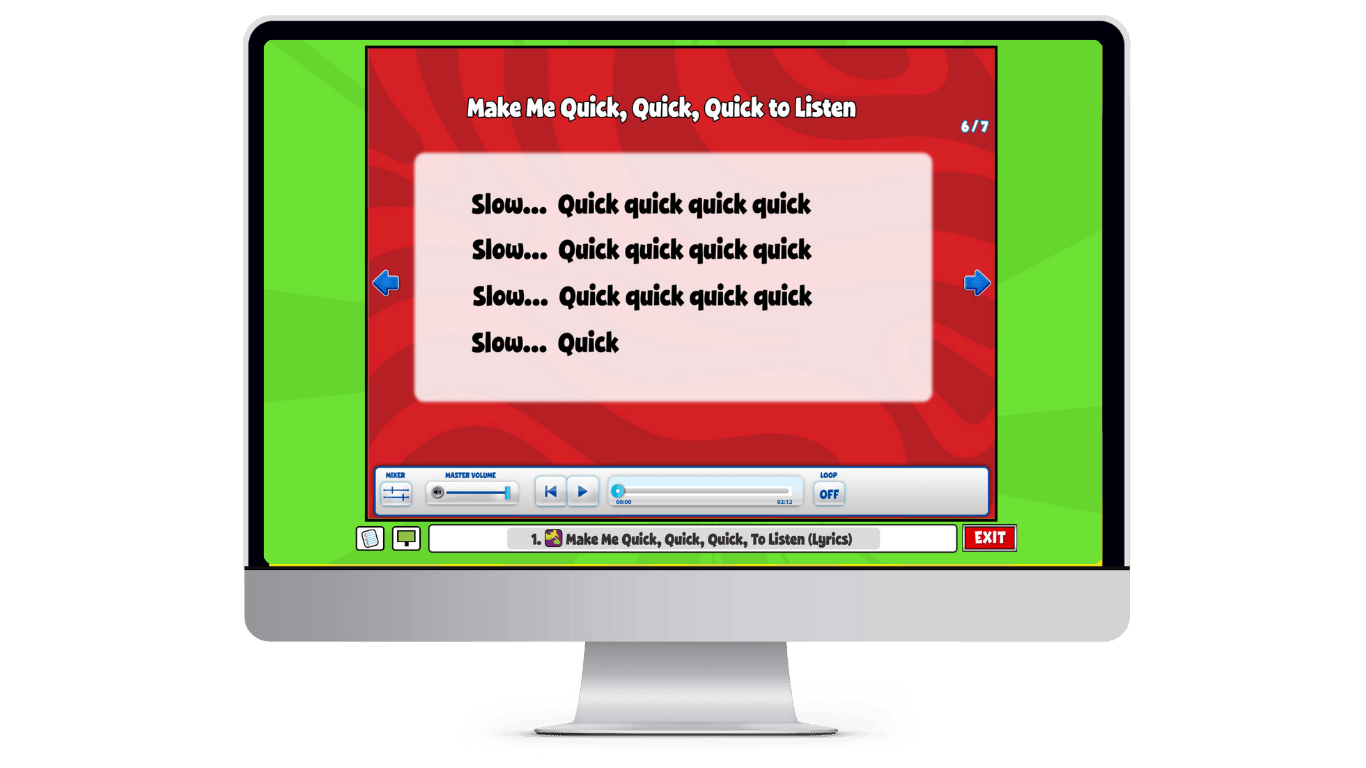
“Quaver’s pre-packaged units were extremely helpful because we could pull from their resources, customize the lessons, put them on Google Docs, and push them on out!”
The cutting-edge, cloud-based platform, Dr. Patrick says, afforded vital access not just to the teachers, but to the students as well.
In the face of a crisis, Quaver came through.
The benefits endured far beyond the crisis, however, and they are enduring still.
Dr. Patrick praises the fact that Quaver is carefully designed to enhance the creativity and self-confidence of students by utilizing digital technology to bring music and learning to life.
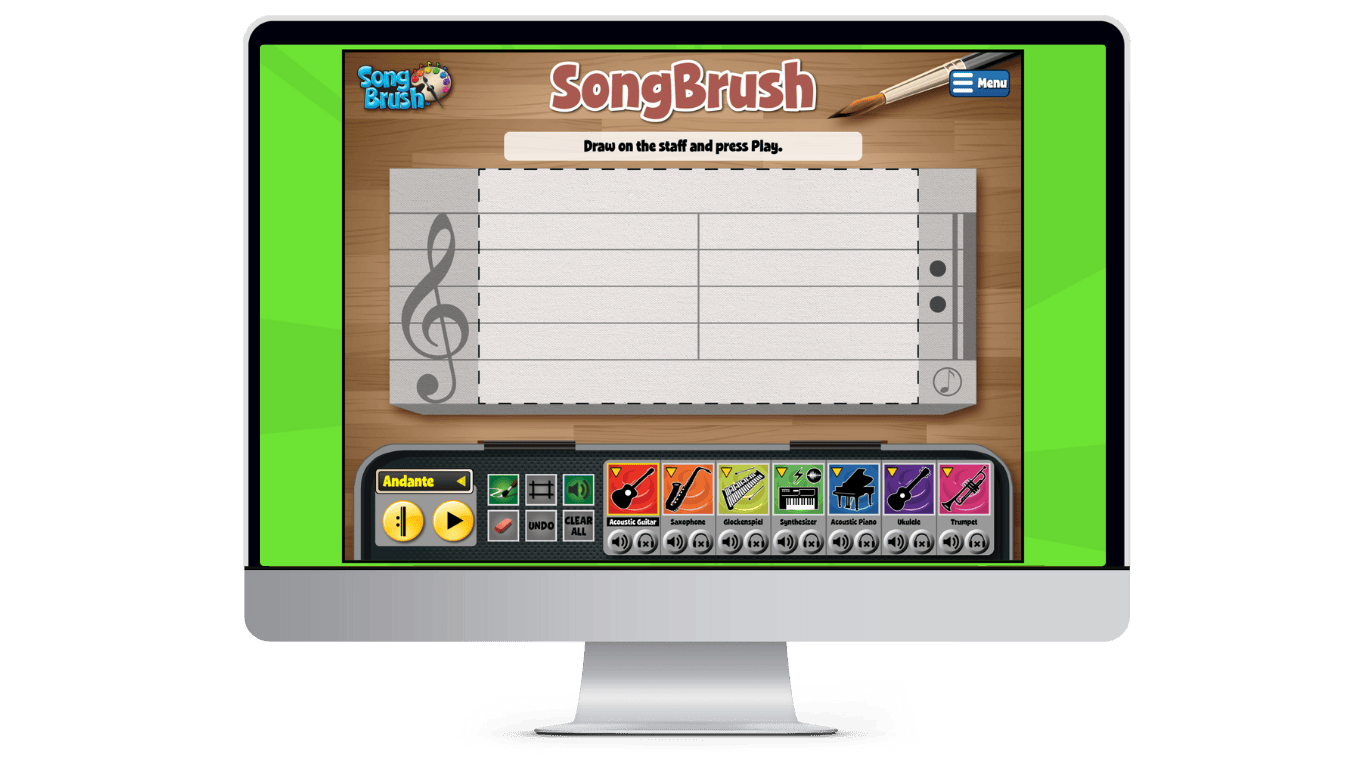
During her own teaching days, she would often turn to the Creatives page to access a number of innovative features.
Among them, a feature called SongBrush, “where different colors make different sounds, which really brings art and music to life!”, Dr. Patrick describes enthusiastically.
Another favorite feature is Backbeat, she says, “where students enjoy creating their own music, then sharing it with others.”
The highly regarded administrator observes that Quaver’s cross-curricular content resonates deeply with music educators throughout the district as well.
“Our district is big on making connections across curricula,” she comments. “Quaver’s science lessons and social studies lessons are huge, as are the SEL modules and activities.”
Dr. Patrick’s enthusiastic support of Quaver is also rooted in the practical and programmatic.
Standards alignment is a very important feature of the curriculum.
“Quaver does a great job of aligning with our state standards,” she says.
“We use pacing guides and benchmarks,” Patrick explains, but she also adds that each educator has the freedom to focus on whatever concentration or lesson they choose, providing it aligns with state standards.
Without a doubt, having Quaver in classrooms throughout the district for that one year was extraordinarily impactful – and the fact that educators stepped up, spoke up, and presented evidence-based proof of the curriculum’s success sent a message that district leaders clearly received.
“When we sat down with our curriculum coordinator for the district at that time, they could already see the benefits that Quaver offered,” Patrick says.
This time, instead of receiving a gentle “not right now,” music educators received a resounding “yes.”
“Yes” to Quaver in the classrooms!
Want to Get Quaver in Your Classroom? “Don’t Give Up!”
Dr. Patrick points to the power of advocacy as the primary reason that Quaver made its way into the Florence City Schools District in the first place.
“The music teacher who fought so hard to get Quaver into music classrooms back then is the reason we have Quaver in our district today!” she says with gratitude.
“I still thank her regularly because if it wasn’t for her not giving up, we wouldn’t have Quaver today,” says Dr. Patrick.
“Our central office sees our teachers using Quaver and has been blown away by what they’ve seen.”
Patrick’s message to other districts who are considering (or trying) to get Quaver:
“Don’t give up!”
Dr. Anne-Marie Patrick is a Fine Arts Administrator of the highest order:
“As an administrator, I get to advocate for some of the very kids that I once taught,” she says. “It’s been extremely rewarding, and I plan to keep on advocating!”
Patrick is living proof that collective advocacy can change things, and that good school districts do, indeed, listen to educators.
She concludes with an expression of pride that is both enduring and heartfelt:
“I’m very proud to be in a school district that uses Quaver.”
To find out how to get QuaverMusic in your classroom, visit QuaverEd.com/Music.
Kristin Clark Taylor is an author and an editor.
***